Synchron World Percussion II complements our ethnic percussion with instruments from Africa (4 instruments), Asia (7 instruments), America (6 instruments), and Europe (3 instruments).
As with our first World Percussion Library, we not only recorded the common articulations and variations in single-hit samples. Our musicians also played the grooves typical for their instruments. These are available as MIDI files which can be played and pre-listened in the Synchron Player’s MIDI Loop Player, and from there dragged into your DAW, thus affording you a measure of freedom regarding tempo, dynamics, length, and arrangement. Of course, the grooves can be edited to fit your requirements. Moreover, you have the choice of playing single instruments, selected groups, or an entire ensemble.
The Library’s Standard Content includes all Articulations with the microphone positions Close 1 (condenser, mono), Mid (stereo) and Main (Decca tree stereo and center), as well as a Room-Mix channel.
Extended Content additionally offers two more Close positions (tube, dynamic), Surround, High, and High Surround positions. These additional microphone positions are used in Stereo-Downmix and Surround Mixer Presets.
In order to place the instruments in the familiar Synchron Stage environment, there are three categories of Mixer Presets: Close, Classic, and Ambient, so that the instruments are compatible and can be mixed with our other Libraries. Apart from these, there are separate Ensemble Mixer Presets with little and more room tone which give one the feeling of standing in the middle of the percussion ensemble.
For quicker and easier integration of the grooves into your DAW, we created Vienna Ensemble Projects which are available in the Vienna Assistant’s “Additionals” section. These Projects include all instruments of a rhythm group and are matched to the respective ensembles’ MIDI Files, saving the user loading each instrument individually, and already aligned with the grooves’ MIDI channel assignments. You can find more information in the chapter Working with Vienna Ensemble Projects at the end of this document.
The musicians who played for our library are Ibou Ba from Senegal, Hamidreza Ojaghi from the Kurdish region of Iran, Sasa Nikolic from Croatia, Felix Morgenstern from Germany, and Emma Frauenholz and Marnix Veenenbos from Austria.
The library offers three general types of Precision Presets in separate folders.
In VelXF rolls - Mod presets the keystroke velocity of rolls is controlled with the modwheel (MIDI CC 1). Accordingly, presets that contain rolls are marked "VelXF rolls" in addition to their name, others "Velocity". These tags are also used in the instrument descriptions below.
VelXF - Mod presets control the velocity of all articulations with the modwheel.
Velocity presets, on the other hand, have all articulations react to the velocity of the keystroke in normal keyboard fashion.
Velocity crossfading in general can be switched on and off in the player's Perform tab.
Instruments: batá drums, udu, African agogo bells, kalimba.

Instrument type / sound
Batá is a conical or hourglass-shaped drum with two heads. It is used in ritual context by the Yoruba in Nigeria and Benin, but also has a place in Afro-Cuban jazz ensembles.Playing technique
In Cuba, three drums of different sizes are used: iyá (mother) is the largest and played by the most experienced drummer. The middle-sized drum is called itólele, and the smallest okónkolo. The players have the drums lying on their lap, so that they can be played with both hands.
Cultural background
Batá are closely connected with the Lukumí (commonly called Santería) religion and Yoruba mythology. The drums are considered to be “alive” and vessels of the divine mystery (añá) which are “talking” to their audience by means of their sounds.
01 Batá drums - Velocity
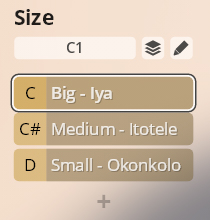
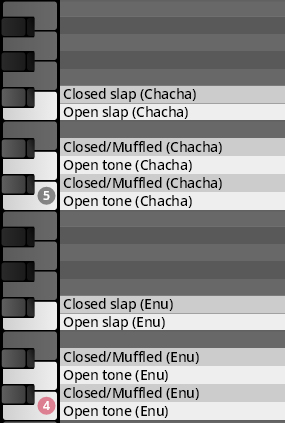
The preset contains the three drums in separate slots with all articulations.
Drum size: C1–D1.
MIDI Grooves
The ensemble grooves feature all three drums on separate MIDI channels.
channel 1: iyá (big)
channel 2: itótele (medium)
channel 3: okónkolo (small)

Instrument type / sound
The Nigerian udu is a plosive aerophone as well as a percussion idiophone made of fired clay – a round-bodied pot with an opening on the top and another one on the side.
Playing technique
The udu is played with both hands on different areas, one hand also covering and closing the sound opening. It is either placed in the lap or attached to a stand.
Cultural background
In the language of the Igbo in Nigeria, udu means “jug”. Traditionally, it is mainly used by women to accompany dances or songs, as well as in different orchestral formations. According to Igbo belief the sound of these drums carries the voices of their ancestors.
02 Udu - VelXF rolls
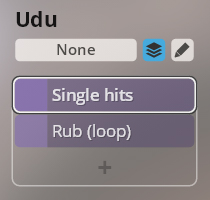
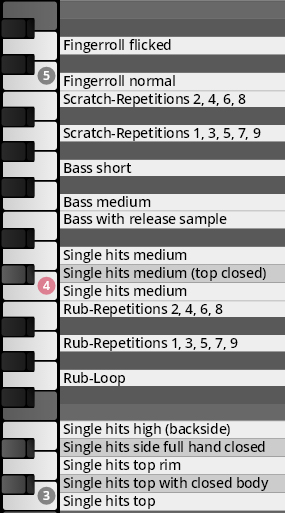
The preset provides all articulations mapped to the keyboard.
Instrument type / sound
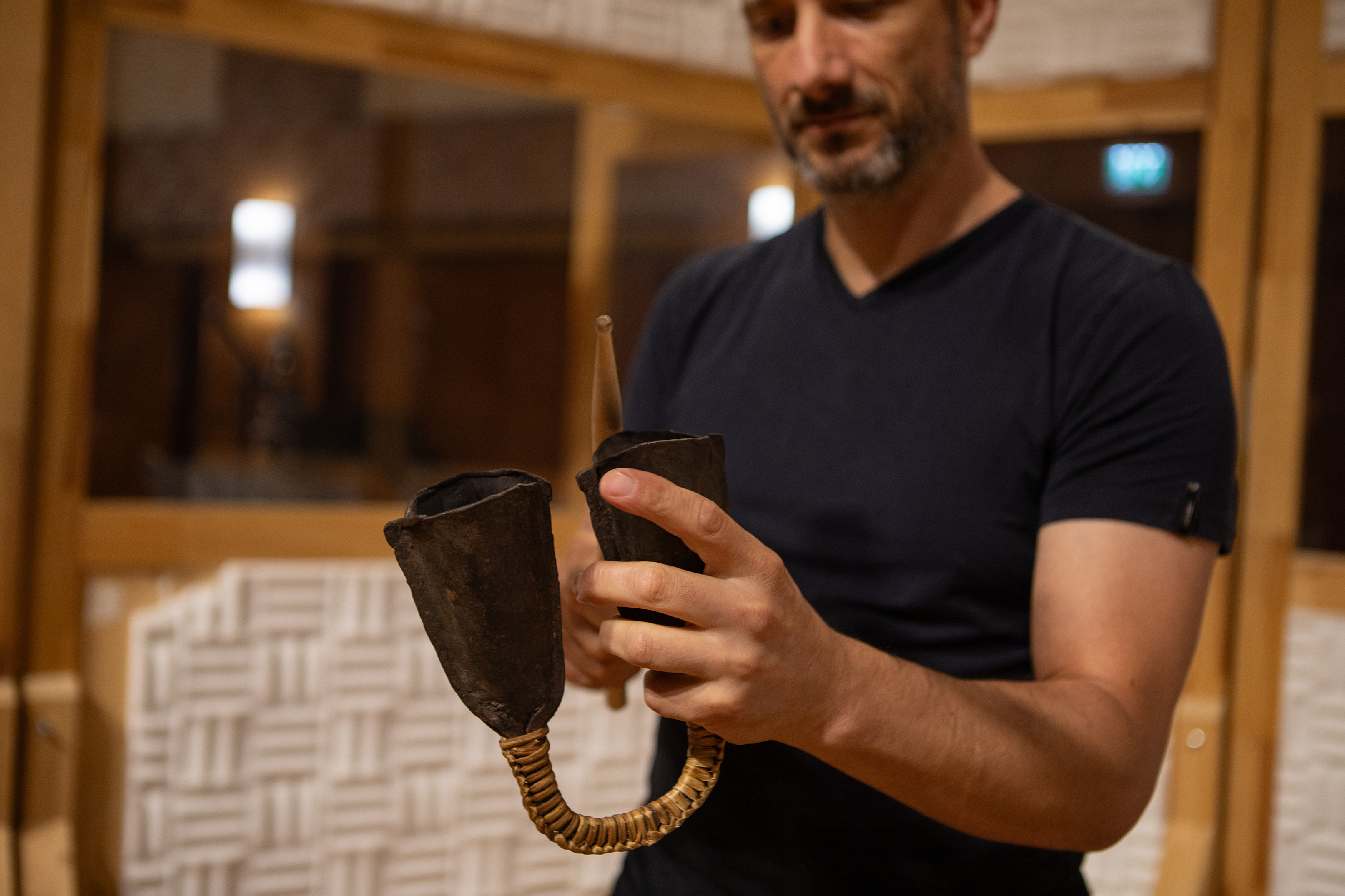
The agogô is used in the music of the Yoruba, Igala, and Edo in Nigeria. It is a bell percussion instrument that consists of two conical metal bells made of rolled-up sheet metal and held together by a U-shaped piece of metal.
Playing technique
The two bells are of different size and pitch. They are struck with a short rod.
Cultural background
The agogô was brought to South America by African slaves, and today plays an important part in the percussion ensembles of Brazilian and Cuban music.
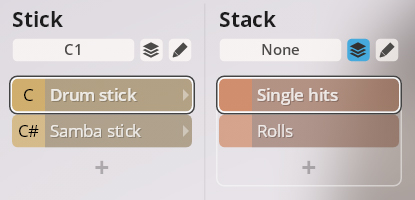
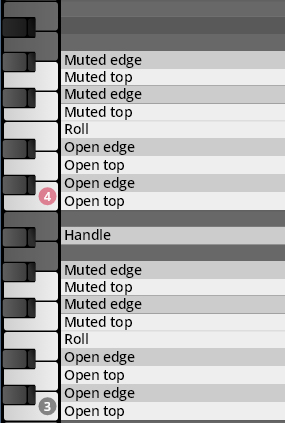
03 African agogo bells - VelXF rolls
The agogô bells can be played with a normal drumstick or with a samba stick.
Drum stick / samba stick: C1/C#1.

Instrument type / sound
The kalimba, also known as sanza or mbira, is a traditional instrument not only in Malawi and Zimbabwe. A plucked idiophone, it belongs to the family of lamellophones. It is often tuned diatonically.
Playing technique
The kalimba consists of several tines fixed to a board or a resonance box. The tines are plucked with the fingers.
Cultural background
Various types of lamellophones can be found throughout Eastern and Southern Africa.
04 Kalimba - Velocity
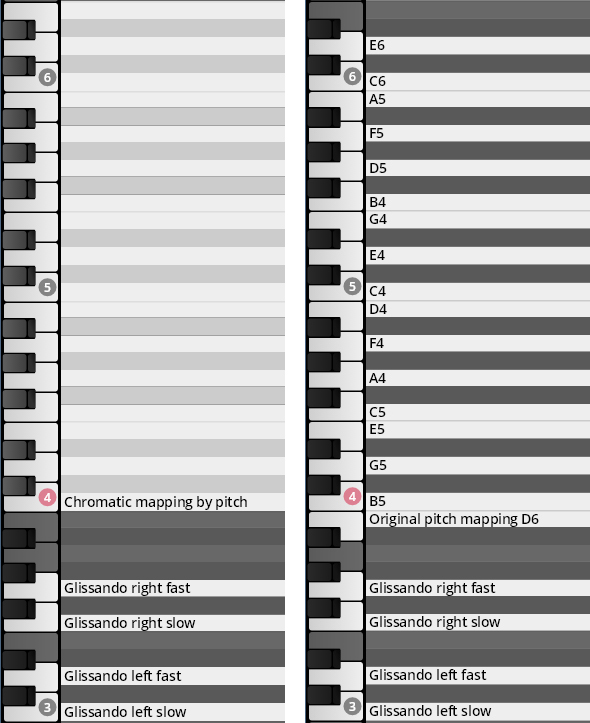
The preset contains two different mappings. The “original” allows one to play in the same way the instrument’s tines are arranged, i.e., low notes in the middle and getting higher to both sides. This makes it rather easy to create authentic phrasings. The “chromatic” mapping, on the other hand, can be played like a regular keyboard instrument.
Mapping switch: C1/C#1.
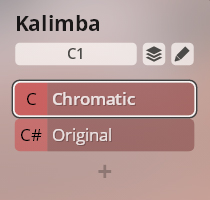
Mapping chromatic / original
Instruments: pakhawaj, mridangam, angklung, Chinese temple blocks, China cymbals, dammam, zang.
Instrument type / sound
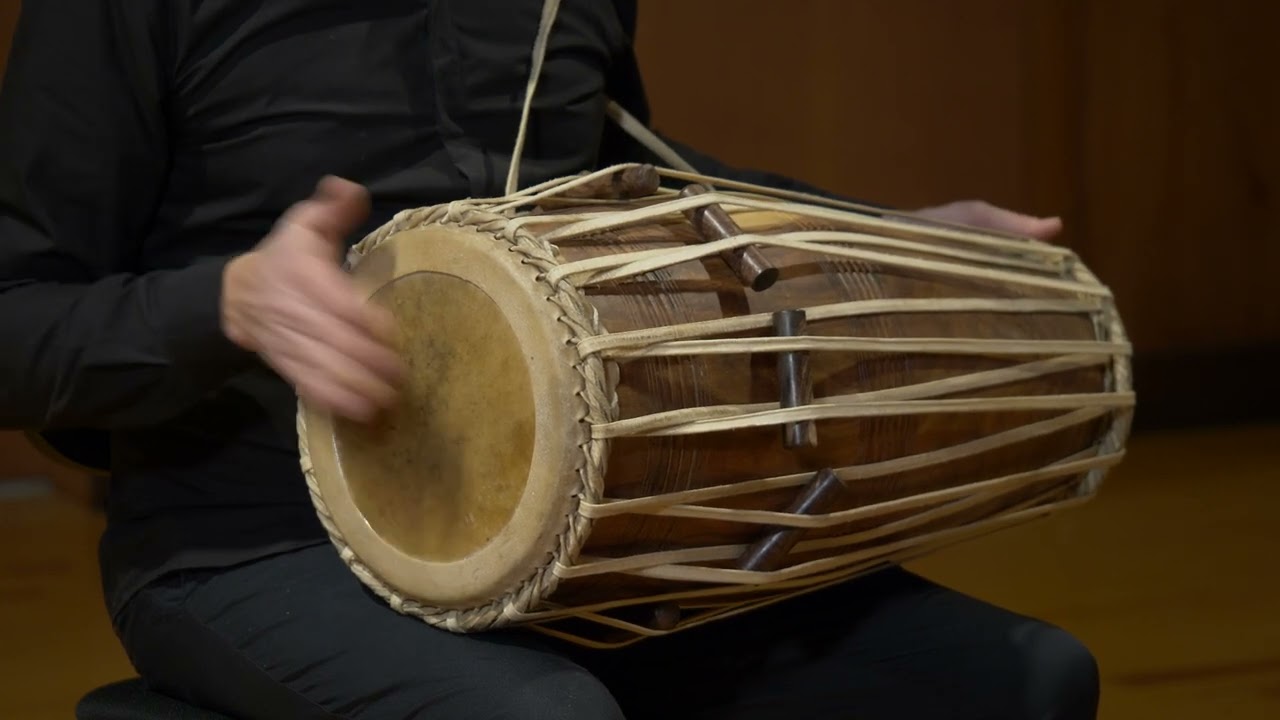
Mridangam and pakhawaj from India are barrel drums. They are played with the hands on both sides. Apart from that, there are differences between them in their construction and the musical context they are played in. The mridangam is a central part of South Indian music – its heartbeat, so to speak. It has an acute and bright sound. The North Indian pakhawaj sounds deeper and more resonant.
Playing technique
To play the mridangam, the musician places it on their foot and leg, the pakhawaj lies on the ground in front of the musician. The instruments’ skins are of different sizes: the smaller one is played with the right hand, the larger one with the left. Special stroke techniques allow the musician to play several defined pitches especially on the right side. In this way, the mridangam can also contribute melodic elements. Like the tabla, the pakhawaj has its own language of onomatopoetic percussion syllables.
Cultural background
Both instruments are played in classical Indian music. The mridangam is also known for its accompaniment of bharata natyam, an Indian temple dance, while the pakhawaj is used to support the reverent and serious song style dhrupad as well as the rudra vina, but also shines as a solo instrument in its own right.
01 Pakhawaj - Velocity, 02 Mridangam - Velocity
Mapping pakhawaj
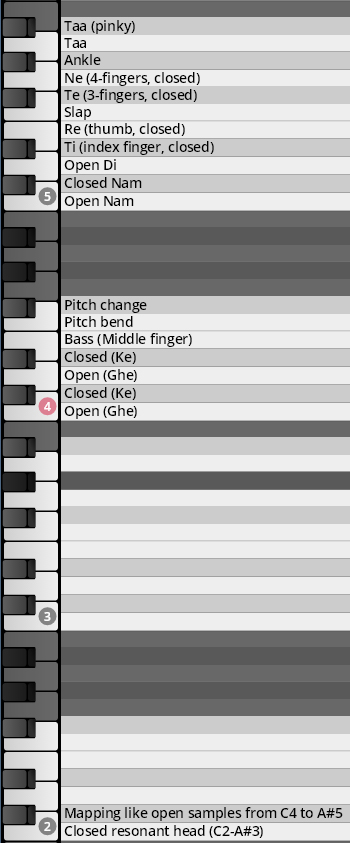
Mapping mridangam
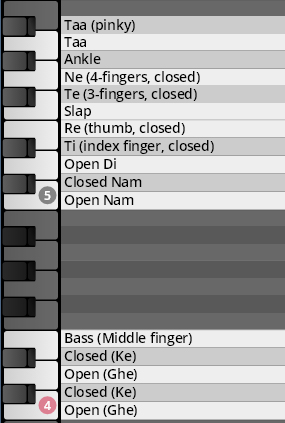
MIDI Grooves
Indian music often presents a theme in its basic tempo and then continues it in double time. Accordingly, the themes are also available as MIDI files in basic tempo and double time variants.
Instrument type / sound
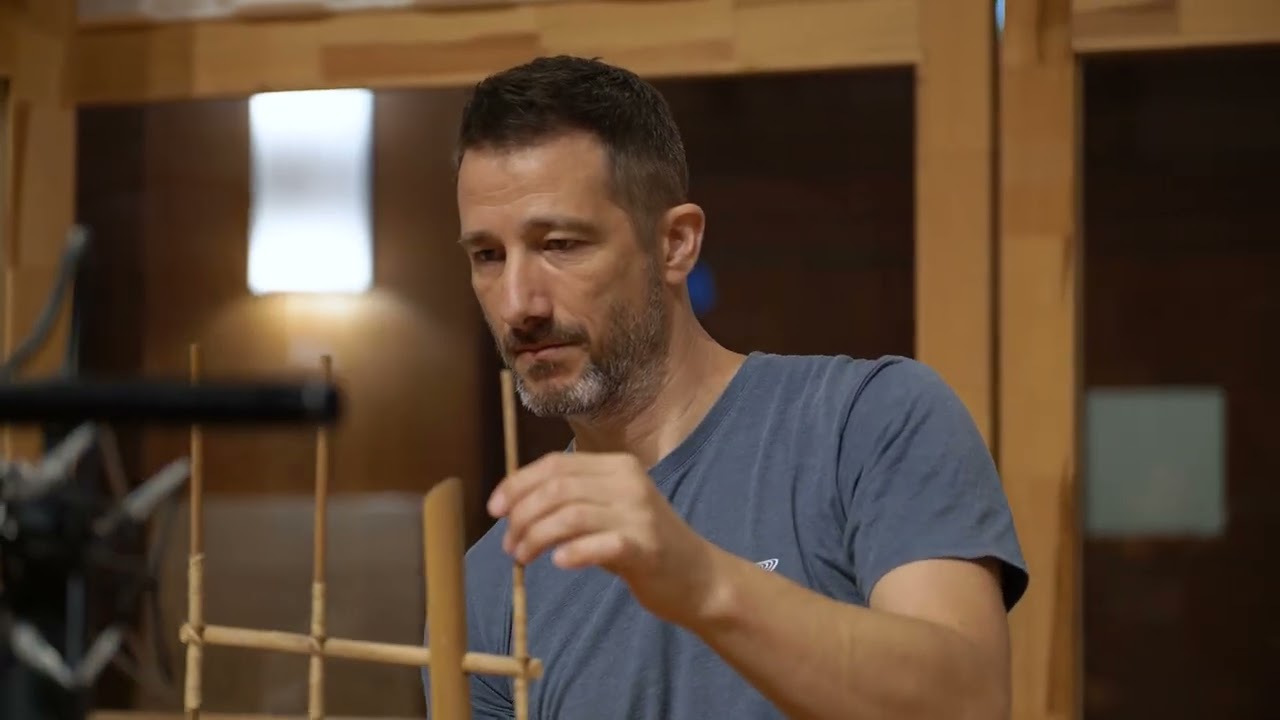
The Javanese angklung is a shaking idiophone made of two or more bamboo tubes whose upper half is open, mounted on a frame. Anklungs are played by several players in sets, and can also be found on other Indonesian islands, in Malaysia and Thailand.
Playing technique
Similar to the pipes of an organ, the size of the sounding body and the width and length of the halved part determine the instruments’ pitch, and likewise each angklung produces only one note. The sound is created by shaking the anklung so that the studs at the bottom of the tubes, which rest in a slot in another piece of bamboo, strike against the edge of that slot. If one wants to play a set of several tuned angklungs alone, they have to be mounted in another frame.
Cultural background
In its beginnings, the angklung probably was a simple piece of bamboo with one end open, and hit with a stick. This was used by hunters to rouse animals. Today’s melody instrument consists of two to four bamboo sounding bodies moving sideways in their wooden frame.
03 Angklung - VelXF rolls
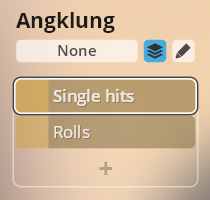
The preset offers single hits and rolls over two and a half octaves.
Mapping:
rolls G2–C4
single hits G4–C7

Instrument type / sound
Temple blocks are percussion instruments which belong to the family of slit drums. Their predecessor was the muyu or wooden bell. Also made of wood, it is a close relative of the woodblock, but has a mellower and fuller sound.
Playing technique
Temple blocks are commonly played in sets of three to five blocks with different pitches. Often they are struck with beaters, of which there are three varieties in this preset.
Cultural background
Temple blocks in China often are made of a round piece of wood that is slitted and hollowed out, resembling the mouth of a frog or a slightly open clam. They are used in Buddhist ritual music, but in the 20th century have also found their way into classical western music and jazz.
04 Chinese temple blocks - VelXF rolls
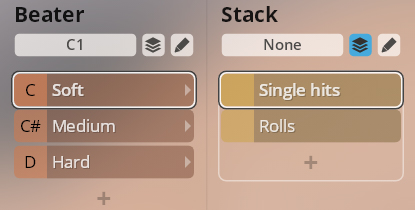
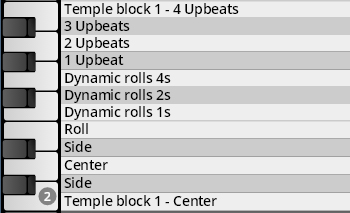
The five temple blocks can be played with soft, medium, and hard beaters. The articulations of each block are mapped to an octave, the lowest starting at C2.
Beaters: C1–D1.
Instrument type / sound
China cymbals distinguish themselves from other types of cymbal by their peculiar shape. The rim has a pronounced upward bend, so that it almost resembles an flattened Bundt cake pan. However, its shape matters less than its sound, which is in the Chinese tradition rather than the Turkish one. The sound of the China cymbal is similar to that of a crash cymbal, but comparatively raw, has more grit, and is shorter.
Playing technique
China cymbals are often used for short, explosive accents and staccato phrases.
Cultural background
The first cymbals probably were created in China. The shape of modern China cymbals reminds one of the traditional Chinese pairs of bo cymbals.
04 China cymbals - VelXF rolls
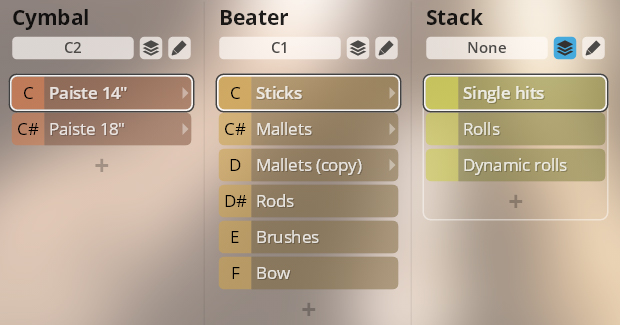
Two China cymbals sized 14" and 18" are available, played with sticks, mallets, rods, brushes, and a bow. In order to align keyswitches with the cymbals of our Synchron Percussion series, the mallet slot is duplicated.
14"/18": C2/C#2.
Beater: C1–F1.
Mapping sticks / mallets
The mappings of sticks and mallets are the same, only the mallets have no edge single hits.
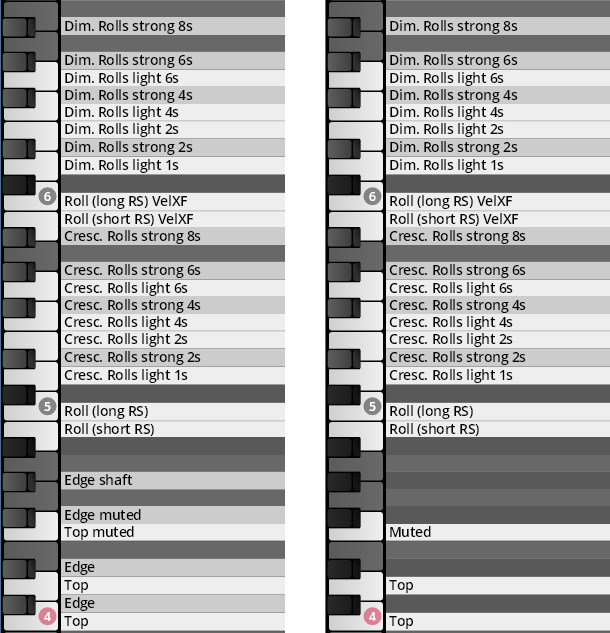
Mapping rods
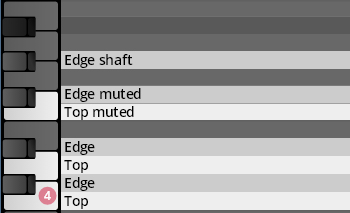
Mapping brushes
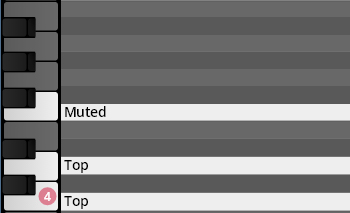
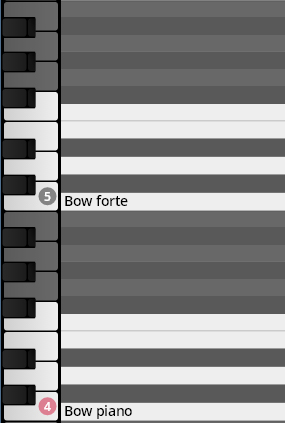
Mapping bow
Instrument type / sound
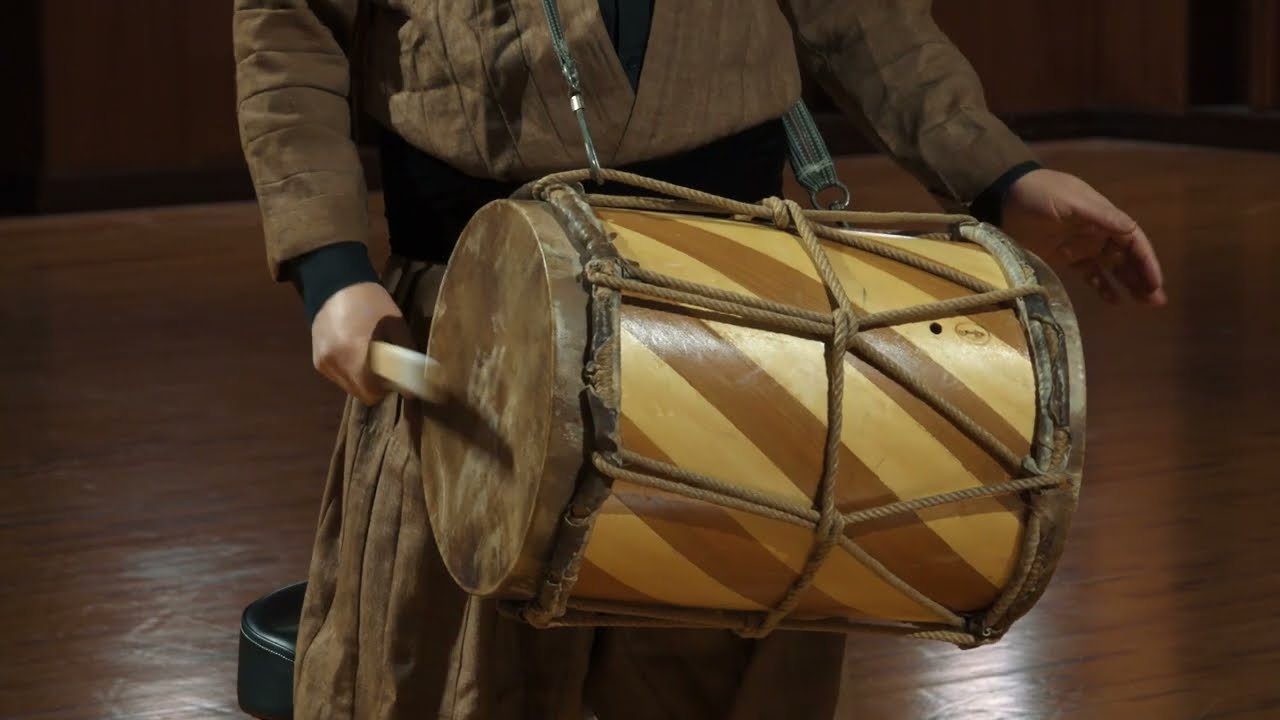
The dammam is a large double-headed cylinder or frame drum. It is played in religious ceremonies by Shias in Iraq and Iran.
Playing technique
The dammam is normally played with the left hand and with a curved stick in the right hand.
Cultural background
The dammam wakes up the devotees during Ramadan and plays an important role at passion plays in the mourning month Muharram. Double-headed cylinder drums in the Middle East are known from Neo-Assyrian illustrations in the first millennium BC.
06 Dammam - Velocity
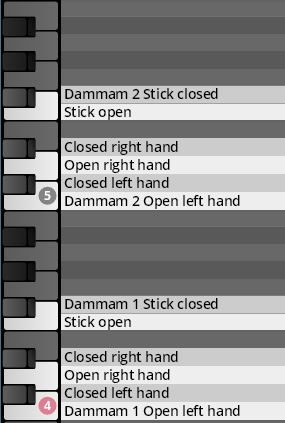
The preset offers two dammams with open and closed hits with hand and stick.

Instrument type / sound
The Persian word zang means bell, and may denominate metal plates, bells of all sizes, or finger cymbals used for rhythmic accompaniment in Iranian, Turkish, and Afghan music as well as in the Caucasus and some regions of Central Asia.
Playing technique
The Iranian zang sampled for this preset are pairs which are struck together.
Cultural background
Small cymbal pairs are known from Babylonian terracotta statues from the 2nd millennium BC. They were probably made from bronze. Similar cymbals were fround in Syria (about 1200 BC) and Egypt (ca. 900 BC). Today, in Iran zang are often played together with dammam drums.
07 Zang - Velocity
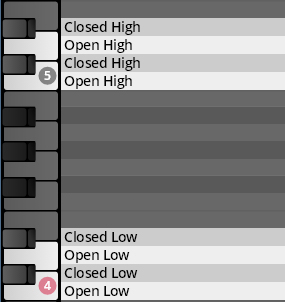
There are two zang pairs of different sizes with closed and open hits.
Instruments: cajón, berimbau, maracas, pu'ili sticks, rainstick, pellet drum.

Instrument type / sound
Cajón is the Spanish word for drawer or (wood) box. It is also a box-shaped percussion instrument from Peru and Cuba, though it is believed to have been brought there by African slaves. It belongs to the family of percussion idiophones of the type hollow slit drum. It is able to produce various drum-like sounds, and is sometimes used as a handy replacement for a drumset. Its sound is mellower and more temperate.
Playing technique
The cajón is played with the hands, with the player sitting on the instrument.
Cultural background
Originally, cajónes are supposed to have been created from transport boxes for fish and oranges, which slaves from Africa used as a replacement after their traditional drums had been taken from them. Nowadays, they are produced all over the world. In the typical Afro-Peruvian build, the striking plate is loosely attached with screws. The snare mechanism is a modern addition, and in this shape the cajón has also entered flamenco ensembles since the late 1970s.
01 Cajon - VelXF rolls
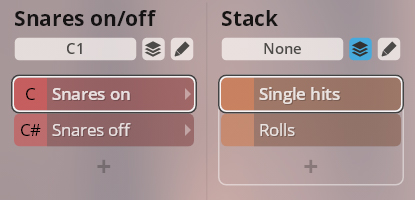
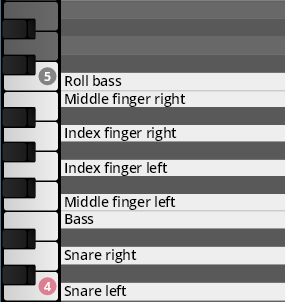
The cajón can be played with and without snares.
Snares on/off: C1/C#1.

Instrument type / sound
The Brazilian berimbau is a musical bow consisting of a curved stick with a piece of wire strung between its ends, and a hollowed out gourd resonator attached at the lower end of the bow and connected with the wire.
Playing technique
The instrument is played with a wooden stick striking the wire. A stone or a coin is used to shorten the wire and thus change pitch. There are three basic sounds: the low open string sound, the high sound, and the buzz sound. The hand moving the stick often holds a closed woven basket containing plant seeds, the caxixi, in order to accentuate the rhythm.
Cultural background
The berimbau is the main instrument of the Afro-Brazilian martial art capoeira that includes elements of dance and music.
02 Berimbau - VelXF rolls
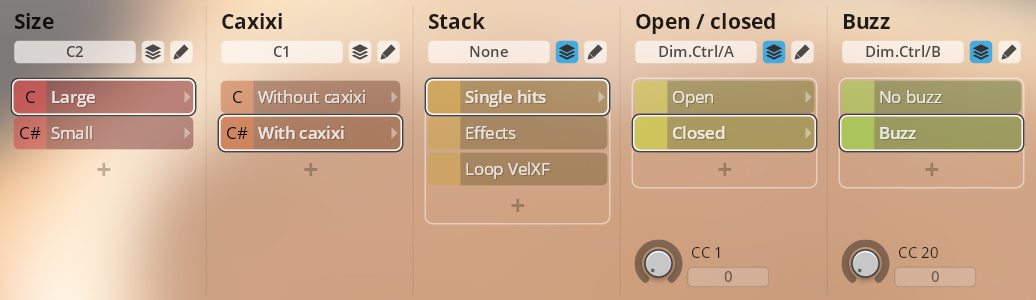
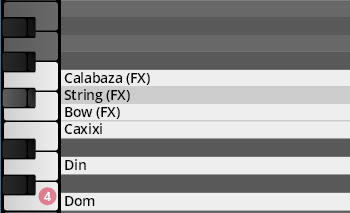
The preset contains a large and a small berimbau, both played with and without caxixi. Use the modwheel (MIDI CC 1) to switch between open and closed resonance body – a technique used by berimbau players all the time.
Large / small: C2/C#2.
Without / with caxixi: C1/C#1.
Open / closed: Dim.Ctrl./A (modwheel, MIDI CC 1).
Buzz: Dim.Ctrl./B (MIDI CC 20).

Instrument type / sound
The maraca is a rattle and therefore belongs to the group of idiophones. It is widely used in South and Central America. The instrument consists of a hollow body with a granular filling, and a handle.
Playing technique
Maracas are mostly played in pairs. The player holds them by the handles and shakes them rhythmically or strikes them with the fingertips.
Cultural background
Maracas are of course widely used in Latin-American music styles such as son, salsa, bolero, samba, and bossa nova, but they are also often found in pop, rock, jazz, and other styles, as well as in modern orchestral music.
03 Maracas - VelXF rolls
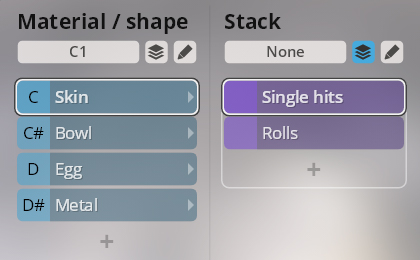
Four different maraca pairs made of skin, bowl-shaped, egg-shaped, and made of metal are available, playing single hits and rolls.
Material/shape: C1–D#1.

Instrument type / sound
Pū’ili sticks are Hawaiian wooden rhythm sticks belonging to the idiophone family, and used in pairs by dancers. They are made of bamboo sticks in lengths of about 50 cm, which are slitted lengthwise from the top so that they resembla a long brush or a thin besom. The bamboo strands strike each other when the instrument is moved, and produce a rattling sound.
Playing technique
The pū’ili sticks are struck against each other, onto the player’s body, or onto the ground.
Cultural background
On Hawaii, pū’ili sticks were already in use before there was any contact with Europeans.
04 Pu’ili Sticks - Velocity
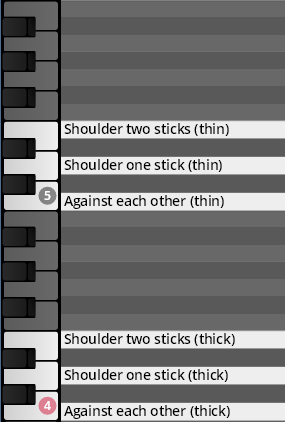
The preset provides thin and thick pū’ili sticks with hits of two sticks against each other, and on the player’s shoulder with one and two sticks.

Instrument type / sound
The rainstick is a vessel rattle from Central and South America. An ancient method of building this instrument is to take a dried piece of cactus whose inside is hollow and press its thorns into the trunk. It is then filled with seeds and sealed. When moving the rainstick, the enclosed seeds (or other granular material) trickle through the thorn pegs, creating a sound like raindrops falling. Today’s rainsticks are often made of bamboo or plastic and are not only used in the field of wellness, but also as a toy for children.
Playing technique
The rainstick is turned around and held diagonally or perpendicular, its angle determining duration and intensity of the rain sound.
Cultural background
The actual age and origin of the rainstick are unknown. Some claim an early origin in Central or South America, which however remains unverified. It is supposed to have been the ritual instrument of rainmaking ceremonies.
05 Rainstick XL - Velocity
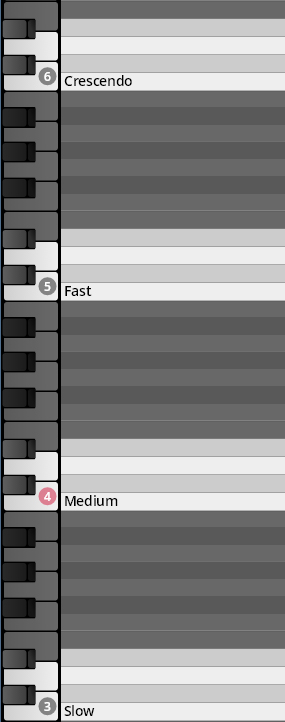
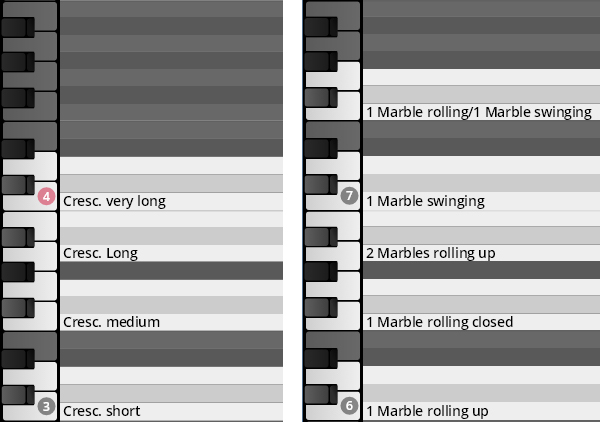
The instrument provides slow, medium, fast, and crescendo samples, each in 4 variants.

Instrument type / sound
Pellet drums are also known as rattle drums or “monkey drums”. The belong to the membranophone family, and are hit indirectly by rapidly turning them to and fro sideways. Pellets attached to strings fixed to the drum’s body strike against two skins and create a series of sounds. The drum is often equipped with a handle.
Playing technique
The handle is rubbed between the palms to create an oscillating movement.
Cultural background
Pellet drums exist indepently in many regions of the world. Early depictions of these instruments were found, e.g., in India and East Asia.
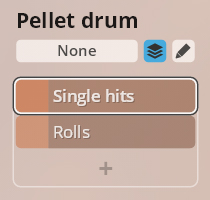
06 Pellet drum - Velocity
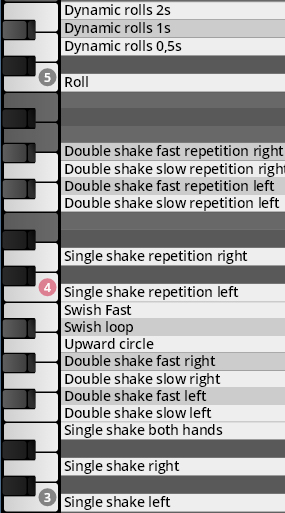
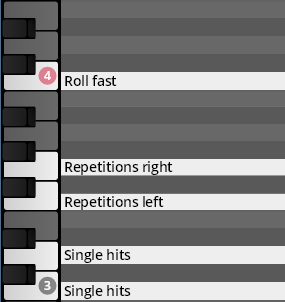
The preset offers single hits, repetitions left and right, and fast rolls.
Instruments: bodhrán, ocean drum, wedding bell.
Instrument type / sound
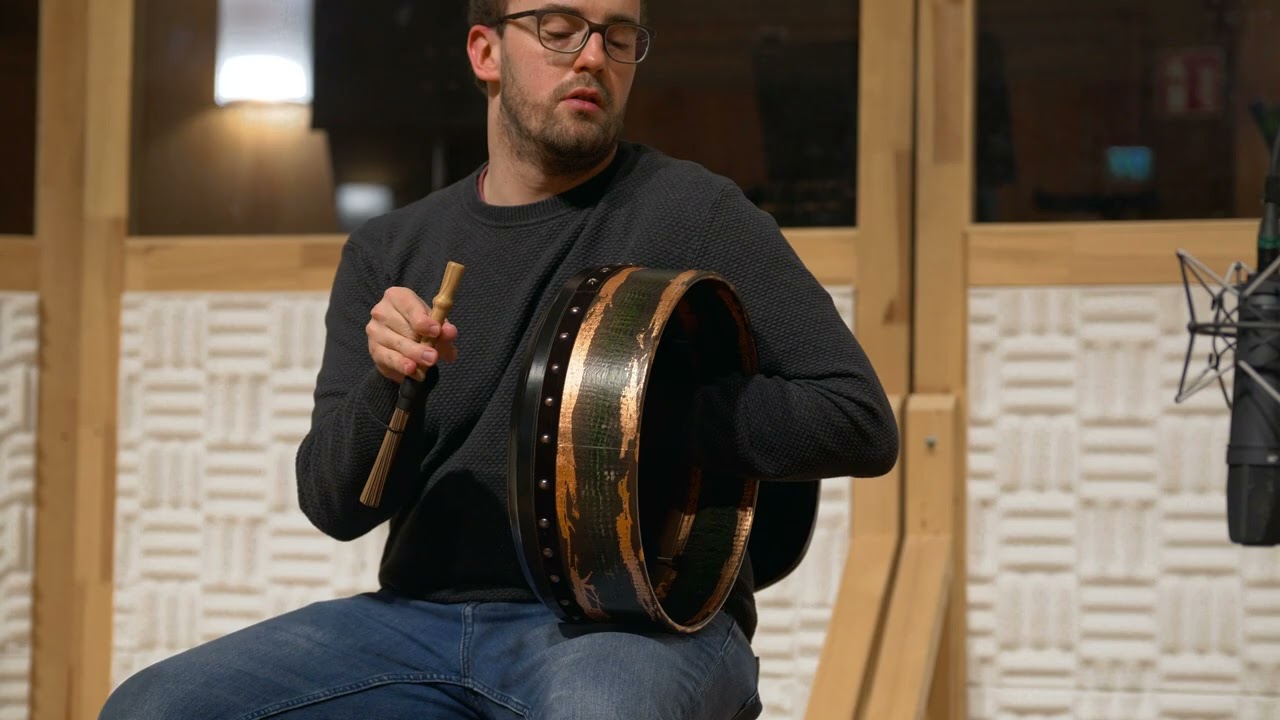
The bodhrán is an Irish frame drum. The frame is covered with hide (often goat skin) and sometimes strengthened by inserted crossbars. Playing with or without cross is a question of taste rather than authenticity. Modern bodhráns are equipped with a mechanical tuning device so that the skin’s pitch can be adjusted. Good skins can thus be tuned to an exact fundamental, which in Irish music is often D or G.
Playing technique
The bodhrán is usually played sitting, placed on the player’s thigh. Right-handed players touch the inside of the skin with their left (and the other way around for left-handers), enabling them to vary the drum’s pitch and create muted effects through pressure and various hand positions. The right hand hits the bodhrán with a small wooden mallet, the “tipper”, a beater, or a stick.
Cultural background
Frame drums are common all around the world, and they reached Ireland probably via early trade routes. The Gaelic word bodhrán is first mentioned in a manuscript from the 15th or 16th century. Earlier versions of the bodhrán were equipped with jingles like a tambourine, but the modern instrument comes without jingles.
01 Bodhran - Velocity
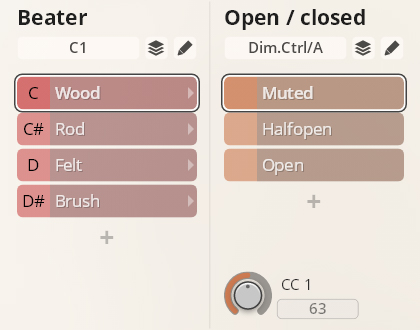
Four different beaters are available. The modwheel (MIDI CC 1) controls whether the bodhrán is played muted, half open, or closed – bodhran players always vary the degree of opening. The articulations are different strokes on center, side, and rim, as well as taps.
Mapping wood, rod, felt – muted / half-open / open
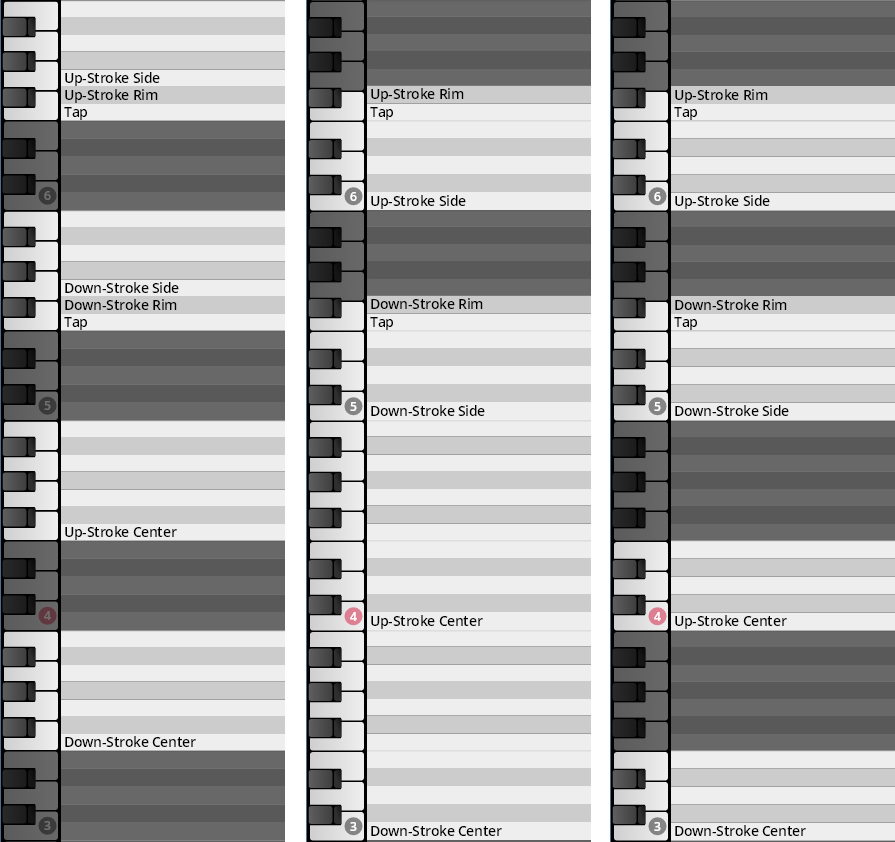
Mapping brushes – muted / half-open / open
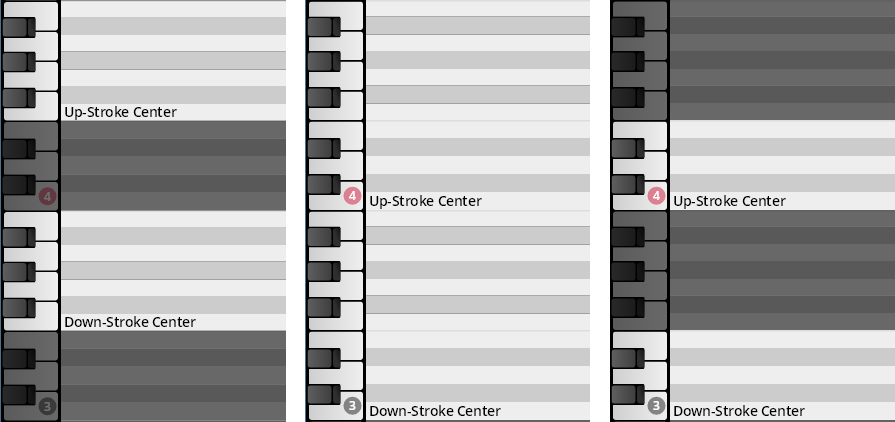

Instrument type / sound
The French composer Olivier Messiaen introduced the ocean drum as an effect instrument to classical music. For the premiere of his work “Des Canyons aux étoiles” in the year 1974 he had a rattle drum constructed and called it “Géophone”. The instrument creates a sound reminiscent of the breaking of waves. The instrument, later also used by other composers, later became known as ocean drum, and today is employed in many music styles as well as in educational contexts.
Playing technique
The ocean drum is swung with the hand. A stronger swinging motion also produces stronger wave sounds.
Cultural background
Rattle drums have attestably been known since the 3rd millennium BC in Mesopotamia. The ocean drum as such was invented by the composer Olivier Messiaen.
02 Ocean drum - Velocity
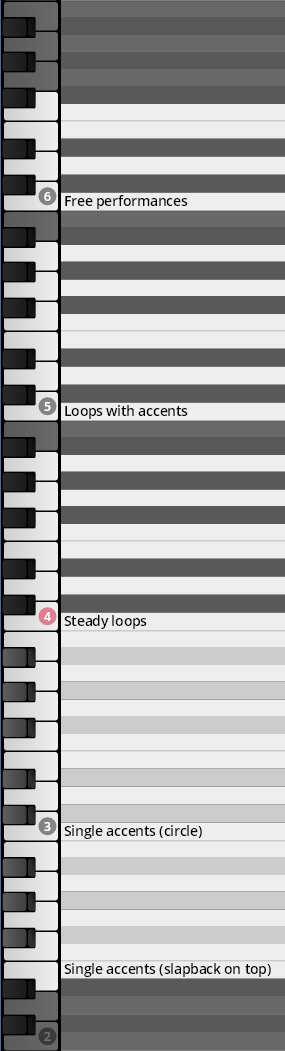
The preset offers several variants of single accents, loops without and with accents, and free perfomances.
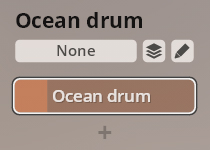
Instrument type / sound
The wedding bell used for these samples was produced by the Austrian bell foundry Grassmayr. It is a hemispheric sound bowl made from bronze, and has a sustained reverberation.
Playing technique
The instrument can be played with different beaters by striking or rubbing it.
Cultural background
Originally, sound or singing bowls are traditional kitchenware from the Far East, especially Tibet, Nepal, China, Japan, and India. In western countries, they are popular utensils in esoteric circles and for meditation. Next to meditation, they are also used in sound therapy. Sound bowls are rathere rarely used purely in a musical context.
03 Tyrolean wedding bell - Velocity
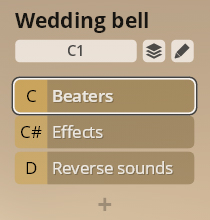
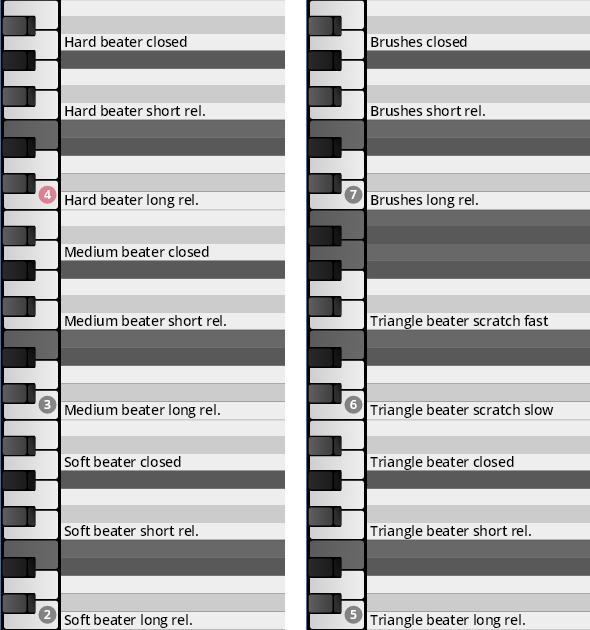
The preset offers playing techniques with soft, medium, and hard beaters, effects, and reverse sounds.
Mapping – beaters
Mapping – effects
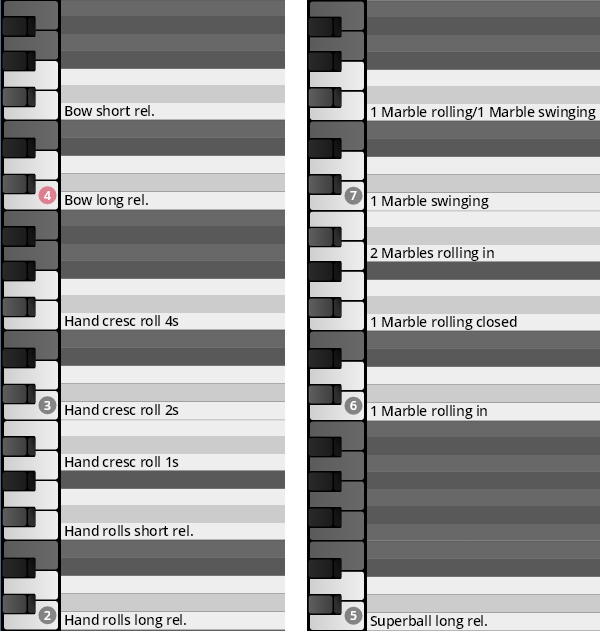
Mapping – reverse
The .zip file you can download with the Vienna Assistant contains one Vienna Ensemble Project for each region of the Synchron World Percussion Library. These are designed to provide you with perfectly set up rhythm sections which will work in combination with the “Full Ensemble” grooves you can find in the MIDI Loop Player of your Synchron Player.
In your sequencer, insert a multi-timbral version of Vienna Ensemble / Pro.
Use drag & drop to load the VE project of the region you’d like to access into an empty instance of Vienna Ensemble / Pro, and you will see all the instruments lined up!
Open the MIDI Loop Player in the Synchron Player and find the “Full ensemble for DAW” folder.
Attention: If you are using VE Pro on a remote computer, you can drag the MIDI file, e.g., to a networked drive and drag it to your sequencer from there.
Multiple MIDI Channels with the correct naming and MIDI routing will open right away.
Double-check that tempo, time signature and port assignment are correct, and you’re ready to play back the fascinating rhythms our musicians played for you at Vienna Synchron Stage!
On this page
- Introduction
- Standard and Extended Content
- Mixer Presets
- Vienna Ensemble Projects
- Musicians
- Precision Presets
- 11 Africa
- 01 Batá drums
- 02 Udu
- 03 African agogos
- 04 Kalimba
- 12 Asia
- 01 Pakhawaj, 02 Mridangam
- 03 Angklung
- 04 Chinese temple blocks
- 05 China cymbals
- 06 Dammam
- 07 Zang
- 13 America
- 01 Cajon
- 02 Berimbau
- 03 Maracas
- 04 Pu’ili sticks
- 05 Rainstick XL
- 06 Pellet drum
- 14 Europe
- 01 Bodhrán
- 02 Ocean drum
- 03 Tyrolean wedding bell
- Working with Vienna Ensemble Projects